

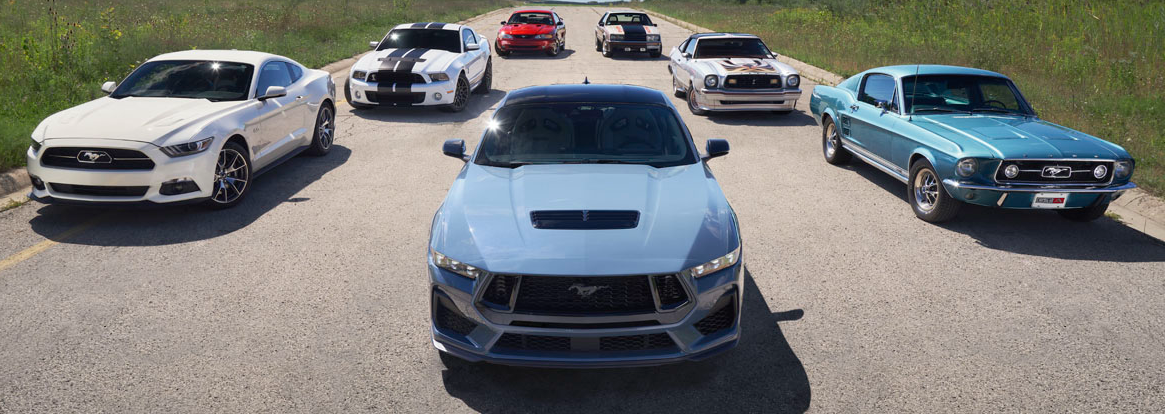
The Ford Mustang is one of America’s most beloved automotive icons, evolving since its 1964 debut while keeping the spirit that made it legendary. For nearly 60 years, this eye-catching pony car has evolved with the times, adapted to new tech, and shifted with buyer tastes — yet it still has the same freedom-loving attitude that defined the original. At John Kennedy Ford Pottstown, we’ve compiled this Ford Mustang evolution timeline.
New Ford Vehicles New Ford Mustang Call Us Today!The Vision Behind the Original Pony Car
Lee Iacocca, father of the Mustang, spotted a gap in the American car market in the early ’60s. Young buyers wanted something sporty yet affordable — a car for daily commutes and weekend fun. The U.S. economy was booming, and the middle class had money for automotive daydreams.
Ford wanted something practical yet exciting, as it needed to win over American drivers while keeping prices reasonable. Iacocca led his team to create something different, a balance between utility and fun that became the Mustang’s guiding star.
The Birth of an American Legend: How the Ford Mustang Revolutionized Automotive Design
When Ford introduced the 1964 Mustang, it didn’t just launch a car — it created a new market segment. The design blended European styling with American muscle car attitude. By using parts from existing models, Ford made the Mustang affordable without looking cheap. Young buyers flocked to dealerships, drawn by reasonable prices and sporty looks.
Ford thought it would sell approximately 100,000 units in year one, but over a million Mustangs hit the streets within 18 months. The car popped up in movies and TV shows, cementing its status as an American icon.
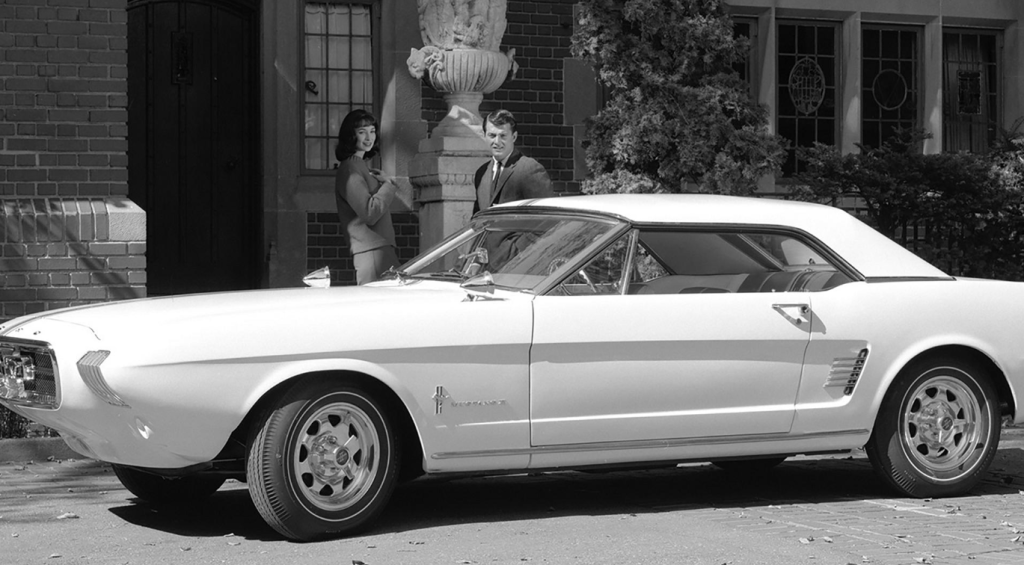
First Generation Excellence: 1964-1973 Design Innovation and Performance Milestones
The original Mustang set the pony car blueprint — long hood and short deck proportions. Production began on March 9, 1964, and the vehicle launched on April 17 with three body styles — a hardtop, convertible, and fastback. Over 22,000 units were sold on the first day.
Engines included a 170 cubic-inch six-cylinder, a 260 cubic-inch V-8, and the legendary 289 cubic-inch V-8. The first-gen Mustang sold 2,981,259 units.
Special models became legendary:
- The 1965 Shelby GT350: A modified 289 cubic-inch V-8 boosted to 306 horsepower, with a Borg-Warner T-10 four-speed manual transmission
- The 1970 Boss 302: A high-revving 302 cubic-inch V-8 producing 290 horsepower with a competition suspension
- The 1970 Boss 429: A semi-HEMI 429 cubic-inch V-8, rated at 375 horsepower but producing up to 500 horsepower
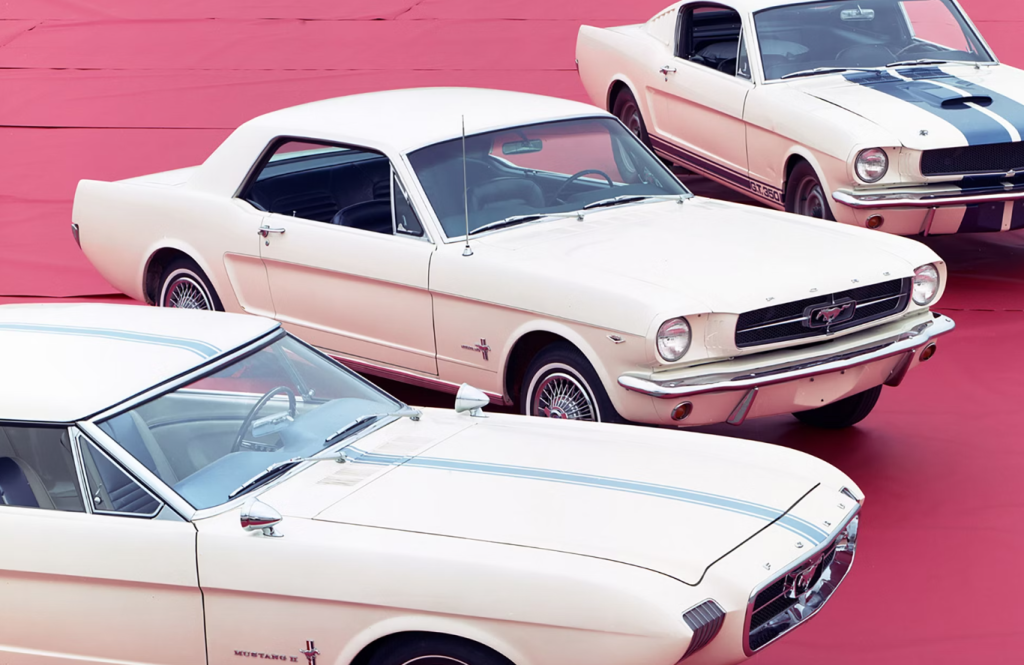
Second Generation Transformation: 1974-1978 Mustang II Era
The Mustang II demonstrated how quickly Ford could change direction when gas prices exploded. It hit showrooms before the 1973 oil crisis. Its Pinto-based platform was controversial, but its smaller size and better fuel economy made sense. Though performance took a hit, and purists weren’t happy, MotorTrend still named it Car of the Year for 1974.
First-year sales hit 385,993 units, impressive for a car that hardcore fans dismissed. About 1.1 million Mustang IIs found homes during their production run. Early engine options were modest —a 140 CID four-cylinder and a 171 CID V-6. In 1975, Ford introduced the 140-horsepower 302 CID V-8 because Mustang buyers still wanted that V-8 rumble.
Third Generation Renaissance: 1979-1993 Fox Body Evolution
The Fox Body Mustang brought the focus back to performance. Built on the Fox platform, it kept its muscle car identity. It outlasted three generations of competitors in its 14-year run. Gearheads and drag racers loved these cars, building a massive aftermarket community that’s still active today.
Approximately 2.6 million Fox Bodies were sold over its run, making it one of the most successful chapters in Mustang history. The star of the show was the 5.0-liter V-8 that helped revive muscle cars.
Fourth Generation Modernization: 1994-2004 New Edge Design Philosophy
In 1999, the Ford Mustang redesign, New Edge styling, introduced aerodynamic shapes while keeping the Mustang DNA. Its styling deviated from the soft lines of the Contour and Mystique, and it received a stronger chassis, roomier interior, and improved safety tech.
The Initial 5.0-liter V-8 produced 215 horsepower and 285 lb-ft of torque. The 1996 switch to the 4.6-liter SOHC V-8 kept the same power, but it increased to 225 horsepower in 1998 and 260 horsepower in 1999.
Fourth-gen notable models include the SVT Cobra, 2001 Bullitt, and the 2003-2004 Mach 1. With approximately 1.6 million units sold, this generation proved that modern updates attracted buyers wanting both current tech and classic thrills.
Fifth Generation Revival: 2005-2014 Retro-Modern Design Approach
Ford took a gamble with the S197 Mustang. The design borrowed from ’60s models while including modern tech and current safety rules. The retro styling instantly connected with old fans and new buyers. The risky move paid off, proving that nostalgia can sell when backed by solid performance.
Buyers had engine choices — a 4.0-liter V-6, a 4.6-liter V-8, and later on, the monster Shelby GT500’s supercharged 5.4-liter V-8. Special editions such as the 2008-2009 Bullitt and 2012 Boss 302 helped build the modern Mustang’s performance street cred as a serious sports car. About 1 million fifth-gen Mustangs found homes, confirming the success of the retro-modern approach.
Sixth Generation Innovation: 2015-2023 Global Platform and Independent Rear Suspension
The S550 included independent rear suspension that improved handling and ride quality. Ford went global with right-hand drive versions for the first time, making it available to untapped markets. Styling kept to classic proportions while adding modern aerodynamics.
Engines included the 2.3-liter EcoBoost turbo four-cylinder, 5.0-liter Gen II and Gen III V-8s, and supercharged 5.2-liter Predator V-8 generating 760 horsepower in the Shelby GT500.
The 10-millionth Mustang, a 2019 Wimbledon White V-8 convertible, rolled off the production line on Aug. 10, 2018.
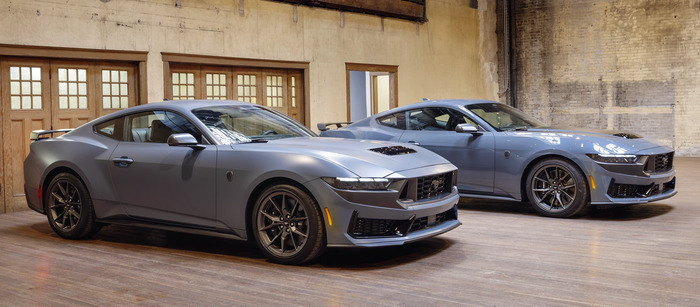
Seventh Generation Advancement: 2024-Present Digital Age Mustang
Production on the seventh-gen Mustang began on May 1, 2023. It features an updated interior including Ford’s Sync 4 system with a 13.2-inch touch screen and a 12.4-inch digital cluster. The new Mustang has Ford Co-Pilot360 safety tech, while exterior styling blends classic cues with modern aerodynamics.
Engine choices include a redesigned 2.3-liter EcoBoost producing 315 horsepower and a revised fourth-gen Coyote V-8 generating 500 horsepower in the Dark Horse trim. The 2025 Mustang has six trim levels — the EcoBoost, EcoBoost Premium, GT, GT Premium, Dark Horse, and Dark Horse Premium — ranging in price from $31,920 to $69,375.
Experience the Mustang Legacy at John Kennedy Ford Pottstown
From that first 1960s Ford Mustang to today’s tech-packed seventh generation, the Mustang has rolled with the punches while staying true to itself as America’s favorite muscle car.
If you’re in Pottstown, Reading, or Sanatoga, visit John Kennedy Ford Pottstown or browse our Mustang inventory to see how 60 years of progress created today’s pony car. Whether you’re leaning toward the fuel-friendly EcoBoost or a Coyote V-8, contact us to schedule a test drive where our team can help find your perfect match. Discover our most advanced, exciting Mustang yet.
Images from ford.com
Connect with us


- August 2026
- July 2026
- June 2026
- April 2026
- March 2026
- February 2026
- January 2026
- December 2025
- November 2025
- October 2025
- September 2025
- August 2025
- July 2025
- June 2025
- May 2025
- April 2025
- March 2025
- February 2025
- January 2025
- December 2024
- November 2024
- October 2024
- September 2024
- August 2024
- April 2024
- March 2024
- February 2024